Showing posts with label Japan. Show all posts

2013/05/16

What Would Jesus Do?


Self-styled Japanese "politician" and thousand-yard stare master Matayoshi Mitsuo, a.k.a. The Only God Matayoshi Jesus has chimed in on Osaka mayor Toru Hashimoto's comments that comfort women were "necessary" during WWII. 

The voice of reason??

Below is the comment from his official website, updated on May 15, 2013.

The Japan Restoration Party joint representative Toru Hashimoto's claim that the comfort women system was "necessary" and advice to the commander of Air Station Futenma to allow soldiers to frequent sex establishments (to help them satisfy their sexual urges) are intolerable. They do not take into consideration the circumstances and he doesn't understand the weight of his statements. They are ideas that spring out of an irrational, garbled mind. An irrational, garbled mind should not be allowed to spark controversy. This is not a party to "restore" Japan, it is a party that will cause Japan to rot.


[original text]
日本維新の会共同代表橋下徹の「慰安婦制度は必要であった。」「米軍普天間飛行場司令官への風俗業利用進言。」は内容がない、 状況を踏まえない、言葉の重さを知らない。それは彼の思慮分別のないゴチャゴチャ頭から出ている。 思慮分別のないゴチャゴチャ頭で物議を醸すのはやめるべきだ。それでは日本維新の会ではなく、日本を腐らす会だ。

http://www.matayoshi.org/comment/index.html#new (#274)

2013/01/25

What's the deal with used electronics anyway?

Another interesting garbage-related story came to the attention of the Tokyo Anaba editorial team this week. (be sure to check our original post about recycling in Japan). The Nikkan Kogyo Shimbun reported on January 22 that JX Nippon Mining and Metals, a resources company based in Tokyo is in talks to form a joint venture in Canada to salvage metals from circuit boards of used electronics to ship to Japan.

That's right. There are not enough used electronics in Japan--a country practically buried in used electronics--to satiate the market's need for the valuable metal parts.

As we noted in our last post, a new law regulating the recycling of personal electronics and other "small appliances" goes into effect in April 2013. The aim of the new law is to promote the reuse of "metals and other useful materials" found in small electronic devices.

Takashi Fujii of Mizuho Information and Research Institute explains the reasoning for the updated law in a column from May 2012:

"When  small electronics (items other than TVs, refrigerators and freezers, washing machines and driers) are disposed they are either thrown away as non-burnable or oversized garbage. In the normal disposal process, only some materials like aluminum are recycled and many useful metals are put in landfills untreated."

One man's trash is another's treasure
According to the Nikkan Kogyo report, heavy competition in Japan and the economic downturn have made it more difficult to obtain these metals from used electronics in Japan (i.e., the amount of used phones and computers is dropping, believe it or not) and there are worries about being able to maintain current levels.

JX Nippon has already been salvaging raw materials from recycled goods in Taiwan for export to Japan since 2010. 

The newspaper also notes that leading companies in the non-ferrous metal industry are increasingly looking abroad for recycled materials. Mitsubishi Materials Corporation plans to expand collection of circuit boards from North America, Europe and Southeast Asia. 

It appears that e-waste scavenging, or parts recycling―call it what you will, is a growing global phenomenon which is profitable enough for large multinationals to jump into the fray. Companies like MMC use proprietary methods to extract the rare metals from circuit boards.

Are you telling me all the used computers don't get sent to China?
The current incarnation of the electronic waste wiki page states:
"Critics of trade in used electronics maintain that it is still too easy for brokers calling themselves recyclers to export unscreened electronic waste to developing countries, such as China, India and parts of Africa, thus avoiding the expense of removing items like bad cathode ray tubes (the processing of which is expensive and difficult). The developing countries have become toxic dump yards of e-waste."
This may no longer be the case. The Mail reported last year that the gold content in old mobile phone circuit boards is worth billions and a huge amount is untapped. If it turns out to be profitable to strip used electronics in one country and export halfway around the world just for processing, hopefully the "toxic dump yards of e-waste" will become a thing of the past. We'll see.


2013/01/08

Certifiably mad


Maya Angelou once said "Words mean more than what is set down on paper." Well, not in Japan, where having your specialty in the form of a paper from a trusted organization is rock-solid proof of one's professionalism. 


The latest issue of the Japanese magazine Big Tomorrow lists 21 "certifications" that will help you boost your earnings to higher than the average salaryman. A few winners:

the "baby chick distinguisher"
http://jlta.lin.gr.jp/chick/index.html

the "polconman" (pollution containment manager?)
http://www.jemai.or.jp/japanese/qualification/polconman/outline.html

the "stress coper"
http://coping.jp/certification/

the "parking monitor" (re: meter maid)
http://www.keishicho.metro.tokyo.jp/kotu/project/koshu.htm

the "beer taster"
https://lolipop-dp38114470.ssl-lolipop.jp/

the "security deposit diagnostic specialist"
http://www.shindanshikai.org/

the "baby sign language specialist"
http://www.babysigns.jp/

the "hip hop basics specialist" (for hip hop dance instructors)
http://www.worldrhythmdance.jp/

the "mystery shopper" (goes to restaurants and hotels to rate them)
http://mf-mind.org/about

the "night viewing specialist"
http://www.yakeikentei.jp/index.html


Time to get those instruction books and burn the midnight oils folks. 


2012/03/03

The reluctant and prescient admiral

This one's for the history buffs.

Yamamoto Isoroku, chief planner of the Pearl Harbor attack and then Commander in Chief of Japan's Combined Fleet, two weeks after the signing of the Tripartite Pact:

"It's an impossible state of affairs. The one thing that the navy must do now is see that it gets everything that it considers necessary in making proper preparations. Personally, I feel that if we're going to war with America we must accept the idea that we're taking on almost the whole of the rest of the world. Even if we sign a non-aggression pact with the Soviet Union, it won't mean much—the Soviet Union can't be relied on; what guarantee is there that such a treaty would stop it from stabbing us in the back while we were at war with America? Anyhow, now that things have come to this pass I'll throw everything I have into the fight. I expect to die in battle on board the Nagato. By that time, I imagine, Tokyo will have been set on fire at least three times and Japan reduced to a pitiful state. I shouldn't be surprised if Konoe and the rest—though I don't like to say it—end up being set on and torn to pieces by the public. I don't like it, but there's no going back now."

From The Reluctant Admiral - Yamamoto and the Imperial Navy
by Hiroyuki Agawa (translated by John Bester)

2011/10/15

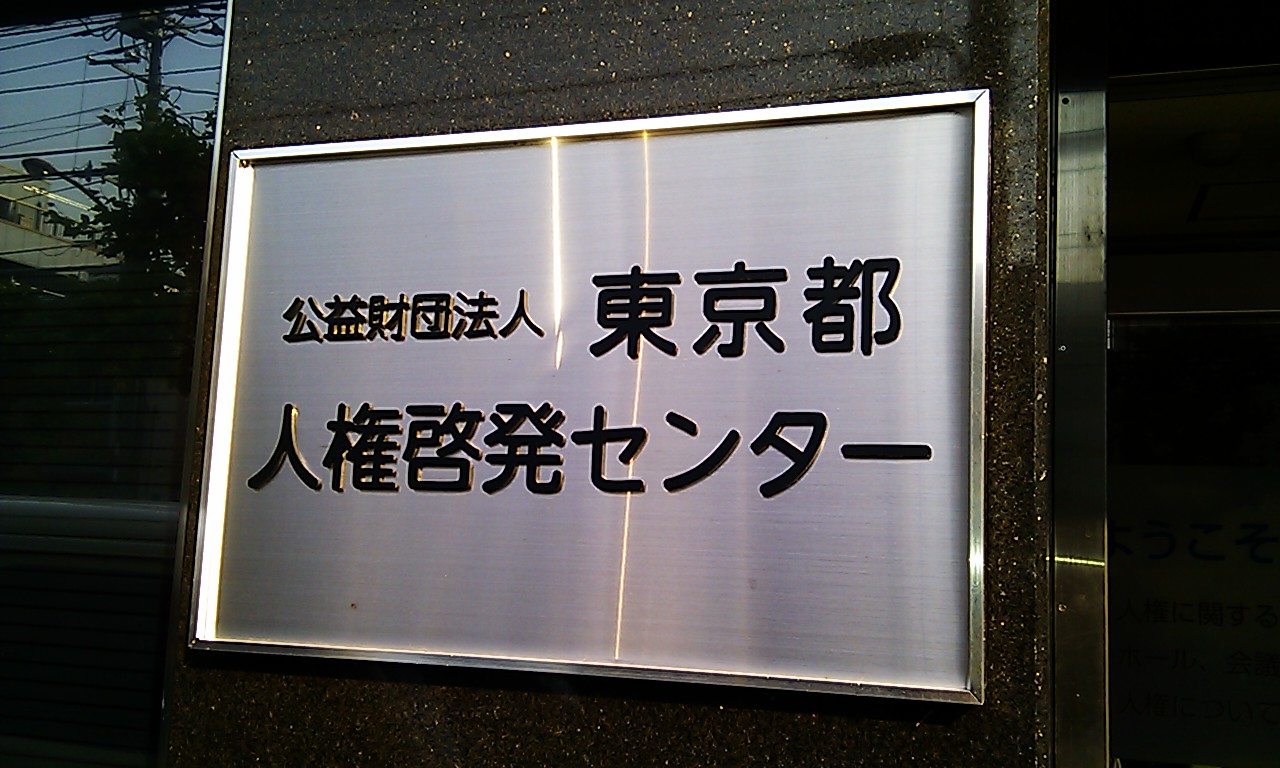
Tokyo human rights center Part 1: History of Discrimination in Japan

So, I was on my way home from a run in the grey hinter-regions between Minami-Senju and Kita-Senju and this uninspiring, drab public building had its doors open.


Yes, you read that correctly. It is the human rights learning center for Tokyo.


"Human rights?" you might be asking. Well, let's venture inside.


The first thing one is confronted with upon entering is a history of human rights in Japan over the years. (this oughtta be good...)

革づくりの歴史 1
History of Leather Making part 1 (hmmm. Interesting. Where might they be going with this?)

1991年、アルプス・チロル地方の氷河のなかから、世界で一番古い革製品を身につけた約5000年前の凍結ミイラが発見されました。牛革製の帽子、火打ち石の入った皮袋、毛皮の服です。これらの製品は樹皮などの植物でなめされていたと推定されています。
日本でも古くから皮革が用いれられており、日本の革づくりの歴史を紹介いたします。

・古代から中世
皮革は古代から武具や献上品として用いられ、6~7世紀には朝鮮半島から渡ってきた人々によって革づくりの技術が向上しました。平安時代後期からは、皮革業は次第に手工業として広がりました。これを担ったのが「河原者」「キヨメ」と呼ばれた人々です。

・戦国時代
戦国時代の武将は革づくりを重視し、武具製造に必要な皮革技術者を集め支配下に置きました。皮役を命じ、その代償として皮革等の専売権を認めました。
この時代にも、皮革技術者に大して「ケガレ」観などによる見方はありましたが、差別は固定化していませんでした。

In 1991, a 5,000 year old frozen mummy was discovered in the Tyrol area of the Alps. It was clothed in the oldest leather items ever found, including a hat made from cattle hide, a leather pouch for holding flint and clothes made from animal skins. These items are assumed to have been tanned using bark and other plants.
Like Europe, leather has also been used in Japan since long ago. Here is a history of leather making in Japan.

・From early history to medieval times
Leather has been used since ancient times for armor and offerings. Improvements in leather technology were made thanks to the arrival of peoples from the Korean peninsula in the 6th and 7th century. In the latter Heian era (794-1192?), leather-working gradually spread as a handicraft industry. Those that took up this trade were referred to as Kawaramono or Kiyome.

・Warring States period (mid 15th to early 17th century)
In this period, making leather for the commander was first priority and those capable were assembled and subjugated to making armor. They were designated as leather workers and as given exclusive rights to sell leather as compensation.
In this era, the leather workers were looked upon as being unclean but the discrimination had not yet been institutionalized.


Okay. Next, let's move on to the Edo period (1603-1868).


革づくりの歴史 2
History of Leather Making part 2

江戸時代
豊臣秀吉は太閤検地・刀狩などによて、武士と農民を分離していきました。その後の徳川幕府はさらに政策を進め、その過程で歴史的、社会的な経緯で差別されていた人々を次第に身分として固定し、さまざまな人々をそこに組み込みました。
皮の生産を専業とされた人々は農民や町人とは別に扱われ、服装や交際など生活全般の制限、村の行政からの排除など、周囲の民衆からもさまざまな差別を受けるようになりました。
禅左衛門は関東地方を中心とする被差別民の「頭」で、幕府は禅左衛門に革づくりや灯心の製造・販売の権利、多くの芸能の監督権などを与える一方、被差別民を刑吏や町奉行の下役などに従事させていました。
関東では、解体処理した牛馬の皮は禅左衛門のもとに送る決まりになっていました。原皮は塩漬けなどで浅草に運ばれ、禅左衛門とその配下の人々によってなめされたのです。

Edo period
With Hideyoshi Toyotomi's nationwide land survey of 1582 and the "sword hunt" of 1588, the warrior class and the peasantry were separated. The Tokugawa shogunate further extended this policy later, causing discrimination against a variety of people to become entrenched due to historic and social reasons.
Those in the leather-making profession were treated differently from other peasants and townspeople, with wide-ranging limitations placed on what they could wear and who they could associate with. They were excluded from local government and were discriminated against by the population at large.
Danzaemon was the person in charge of the outcasts of the Kanto region. Although Danzaemon was given the rights to produce and sell leather and candle wicks as well as the right to oversee many of the performing arts, he was also tasked with execution of outcasts and served as an underling to the town magistrate.
In the Kanto region, it was necessary to send skins of slaughtered horses and cattle to Danzaemon. The skins were brought to Asakusa for salting (part of the tanning process) then tanned by Danzaemon and his subordinates.


近代皮革業の起こり
The origins of modern leather making

・近代皮革業の系譜
明治維新とともに、欧米のなめし技術の移入により皮革業の近代化が進められ、また、近代的軍隊に必要な軍装品の製造が始められました。
皮革産業の近代化には次の3つの系譜があり、現在につながっています。
1.在来の皮革技術をもとにしたもの(弾直樹など)
2.政府と取引のある商人が始めたもの(西村勝三など)
 ー西村勝三が創業した3月15日は「靴の日」となっているー
3.禄を失った土族などに職を与えるためのもの(大塚岩次郎など)

・弾直樹の皮革・靴工場
弾直樹は、被差別民の生計を確保することも目指しました。このため、欧米の皮革技術を習わせ、靴などの製品を軍隊に納めることを計画し、明治3(1870)年には兵部省の契約を得て、翌年王子滝野川(北区)に「皮革製造伝習所」を開設しました。
 アメリカから技師を招き、それまでの革づくりの伝統をもとに、近代的な皮革の製造や靴づくりを目指しました。

明治4(1871)年、被差別民の皮革専業権が廃止され、原皮の入手が困難になっていきました。
明治5(1872)年には、工場を浅草に移転しました。
弾は、経営的には成功したとはいえませんが、多くの被差別民に新技術を伝え、育った技術者は、その後のわが国の皮革産業等や靴製造業を担っていったといわれています。
 

The origins of the modern leather industry
With the Meiji Restoration, European leather tanning techniques were adopted in Japan, which helped modernize the leather industry. It also facilitated the production of military equipment for a modern military.
The modernization of the leather industry can be traced from three important routes, which extend to the modern day:
1. Traditional leather making techniques (Dan Naoki, etc.)
2. Business between the government and merchants (Nishimura Katsuzo, etc.)
 (March 15, the date Nishimura opened the first shoe factory in Japan is celebrated as Shoes Day in Japan today)
3. To provide employment to the Monguor people and others that lost their salary (Otsuka Iwajiro--the man who founded Otsuka Shoten, which is now Otsuka Shoe Co., Ltd. etc.)

・Dan Naoki's leather and shoe factory
Dan Naoki (the 13th and final Danzaemon) had the goal of securing a livelihood for the outcasts. In order to do so, he was ordered to learn European leather technology, and made plans to supply shoes and more to the military. In 1870 he was rewarded with a contract with the Ministry of War and in 1871 set up a leather production learning center in the Takinogawa area of Oji (present-day Kita-ku).
 American specialists were also brought to Japan to help modernize leather production and shoemaking based on traditional methods.

In 1871, with the abolition of the outcast system (exclusive trade in leather), animal skins became difficult to obtain.
In 1872, the factory was moved to Asakusa.
Dan Naoki was not exactly successful managing the factory, but he helped explain the new technology to many outcasts. These new specialists that he trained shouldered the burden of leather and shoemaking in Japan from this point.


So, there you have it. It's not the most detailed or informative explanation, but this is the effort the government of Tokyo gives to educating citizens about its several-hundred year long untouchable system.

For more about Japan's outcast system I recommend checking out Japan's Invisible Race by George A. De Vos. (1966)


View Larger Map

Stay tuned for Part 2 for some information about Ainu history and fun facts about gaijin in Tokyo.


(Note: All explanations here are translations.)

2011/03/20

Helping the Displaced People in Tohoku

What people in Tokyo can do:
Volunteer or donate at Second Harvest.

Donate unused items such as feminine products, baby products such as diapers and lotion, items for the elderly such as adult diapers and wet sheets, as well as water, paper cups and more to the Tokyo Metropolitan Government

Donate blood through the Red Cross Society

What you can do in Japan outside Tokyo:
Make a furikomi (振込み) donation to Doraemon Charity Fund.
Donate canned food, instant rice, cup ramen, batteries, diapers, wet tissues etc. to the Shizuoka government.

What you can do both in and outside of Japan:
Donate to Red Feather Community Chest Movement, a member of United Way Worldwide, which goes toward supporting victims and volunteer groups which are responding to the disaster.

Support Doctors Without Borders


Support Doctors Without Borders

There are also many Japanese NPOs that are accepting donations and volunteers:

Even more info here courtesy of @1rick